
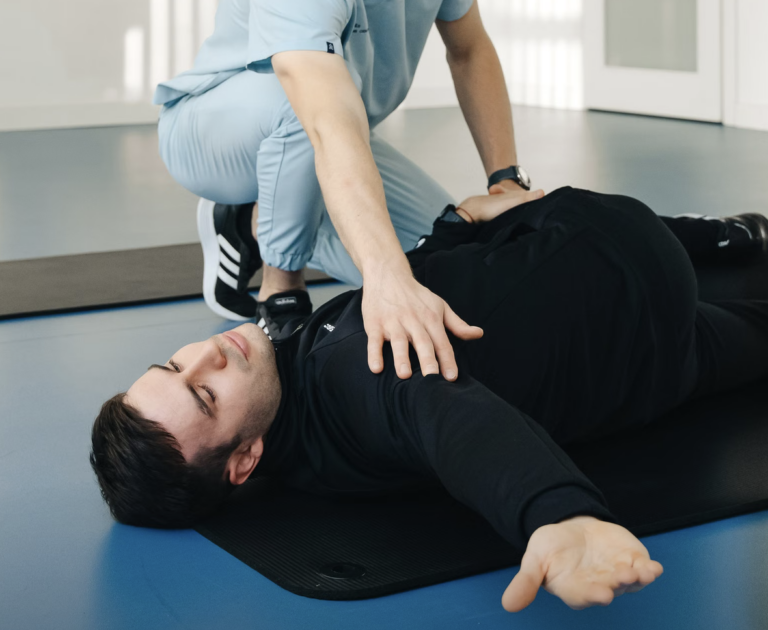
General physiotherapy treats a wide range of everyday musculoskeletal problems, back pain, neck stiffness, post-surgical recovery, arthritis-related discomfort. Sports physiotherapy covers the same clinical ground but is built around the demands of training and competition, with a stronger focus on performance, return-to-sport timelines and injury prevention specific to a chosen activity. If the goal is simply to move without pain, general physiotherapy usually covers it. If the goal is to get back onto a pitch, court or golf course at full intensity, sports physiotherapy is the better fit.
The distinction matters more than it sounds. Someone recovering from a hamstring tear who wants to return to five-a-side football needs a different rehab endpoint than someone who just wants to walk comfortably again. Both are physiotherapy. The finish line is different.
What does general physiotherapy typically involve?
It covers assessment and treatment of pain, injury and movement limitation across a broad range of conditions and age groups. Treatment blends manual therapy, exercise and education, aimed at restoring day-to-day function, sitting, walking, lifting, sleeping without pain, driving. It’s the right starting point for most non-athletic injuries and chronic conditions.
What makes sports physiotherapy different?
- Higher-load rehabilitation goals. Getting back to running 10km, playing 90 minutes of football or swinging a golf club at full speed needs a rehab plan built around that specific demand, not just pain-free daily movement.
- Sport-specific movement analysis. A sports physiotherapist looks at the mechanics of a golf swing, a running gait, or a throwing motion to find what’s actually driving the injury.
- Return-to-play criteria. Rather than “does it hurt”, sports rehab uses specific strength, power and movement benchmarks to decide when someone is genuinely ready to compete again, reducing re-injury risk.
- Injury prevention screening. Sports physiotherapists often run pre-season or performance screens to catch weaknesses before they become injuries.
Who should book general physiotherapy?
- Anyone with everyday back, neck or joint pain unrelated to sport.
- Post-surgical recovery aimed at returning to normal daily activity.
- Older adults managing arthritis, mobility loss or balance concerns.
- Desk-based professionals dealing with posture-related stiffness or tension.
Who should book sports physiotherapy?
- Athletes and regular gym-goers recovering from an injury who want to return to full training.
- Runners, golfers and footballers with recurring, activity-specific pain.
- Anyone training for an event, a marathon, a triathlon, who wants an injury risk screen beforehand.
- People who’ve had multiple flare-ups of the same sporting injury and want the underlying mechanical cause addressed, not just the symptom.
Is there really a big difference in qualifications?
Both are physiotherapists with the same core degree. The difference is usually additional training, clinical experience with athletes, and a deeper understanding of the specific demands of a given sport. A physiotherapist in Dubai treating a lot of golfers, for instance, will recognise swing faults and loading patterns that a generalist might not immediately connect to the injury.
Can a general physiotherapist still treat a sports injury well?
Often, yes, especially for straightforward injuries. The distinction matters most when the goal is a full return to competitive-level performance, or when the injury keeps recurring despite treatment, which usually signals a training load or biomechanical issue that needs a more sport-specific eye.
Do I need to be a serious athlete to see a sports physiotherapist?
No, recreational runners, weekend footballers and regular gym-goers benefit just as much, especially if they want to keep training rather than simply stop until pain disappears.
Will a sports physiotherapist tell me to stop exercising?
Rarely completely. The usual approach is modifying training around the injury while it heals, rather than stopping altogether, since staying active often speeds recovery.
How is return-to-sport decided?
Through specific strength, power and movement tests compared against the uninjured side or normal benchmarks, not simply whether the pain has gone.
Is sports physiotherapy more expensive than general physiotherapy?
Pricing is usually similar, since both involve the same length and structure of session, though some sports-specific assessments or performance screens may be priced separately.
Can sports physiotherapy help prevent injuries before they happen?
Yes, pre-season screening and load management advice are core parts of sports physiotherapy and can catch imbalances before they turn into an actual injury.
Whether it’s a nagging niggle or a full return-to-sport plan, getting the right kind of physiotherapy from the start saves months of frustration. You can book a session here.
Want to live longer, and feel better while doing it?
Twice a week I share practical, physiotherapy-backed insights on longevity, movement and healthspan — no fads, just what actually works.

Marcos Jusdado is a physiotherapist and osteopath at Kinesis Clinic, Vida Emirates Hills, in the heart of Dubai. With 9 years of experience and over 12,000 sessions, he specialises in sport physiotherapy, functional neurology (P-DTR), vestibular rehabilitation and chronic pain, working with everyone from busy professionals to competitive athletes. His approach focuses on finding the root cause of pain rather than just treating the symptoms, helping his patient to achieve long-lasting results.