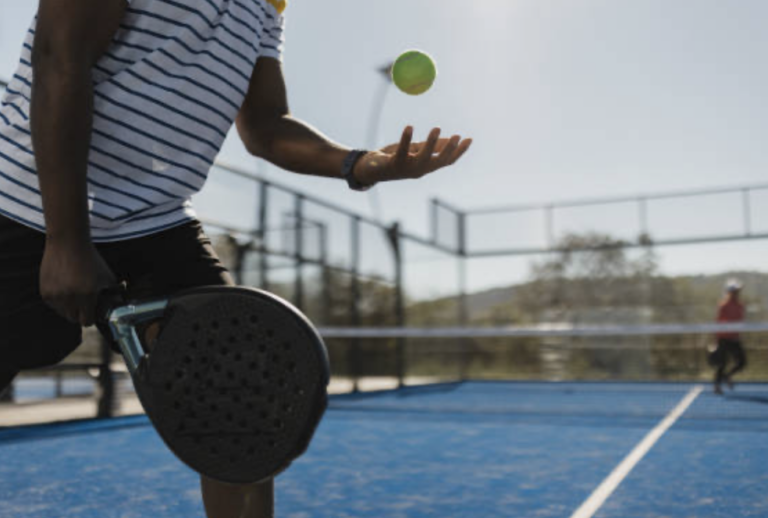
Two players with similar fitness and technique can react to the same fast volley completely differently. One gets the racket in position with time to spare, the other lunges late, twists awkwardly, and tweaks something in the process. A lot of that gap comes down to something rarely talked about in padel, how well the eyes and brain are tracking the ball and coordinating the body’s response to it.
Padel moves fast in a small space. The ball comes off the glass at odd angles, partners cross paths, and a player often has a fraction of a second to judge speed, spin and direction before deciding how to move. That entire process relies on eye-hand coordination, and it turns out to matter for both performance and injury risk.
What does eye-hand coordination actually involve?
It’s the ability of the visual system to track a moving object accurately and quickly relay that information to the muscles that need to respond, adjusting the hand, arm and whole body’s position in real time. In padel, this happens dozens of times a point: tracking the ball off an opponent’s racket, judging its bounce off the glass, and adjusting the swing at the last moment when it deviates from where it was expected to go.
This isn’t purely about eyesight in the sense of needing glasses. Even players with perfect vision vary hugely in how efficiently their visual system processes fast-moving objects and translates that into coordinated movement, and this skill can be trained.
How does this connect to injury risk?
When the eyes and brain are slow to track and predict the ball’s path, the body ends up reacting late, and late reactions tend to be less controlled. A player lunging at the last possible moment, rather than moving into position with time to spare, is more likely to land awkwardly, overreach a joint’s normal range, or hit the ball with poor mechanics that place extra strain on the elbow, shoulder or knee.
- Late reactions often lead to rushed, poorly controlled movements that overload joints
- Misjudging depth or speed increases the chance of overreaching for a shot
- Fatigue late in a match slows visual processing further, which is part of why injuries cluster in the final games
- Poor anticipation means more sudden, unplanned direction changes rather than smooth, prepared ones
Can eye-hand coordination be trained?
Yes, and this is where it becomes genuinely useful rather than just theory. Reaction drills, tracking exercises and dynamic balance work that challenges the visual system alongside movement can meaningfully improve how quickly and accurately a player responds to the ball. This isn’t about doing eye exercises in isolation, it’s about training the visual and motor systems together, the way they actually work during a match.
A physiotherapist working in functional and neurological rehabilitation can build these elements into a broader programme, particularly useful for players returning from injury, since the nervous system’s ability to react quickly and accurately often needs deliberate retraining alongside physical strength.
Does this matter more for certain players?
Players returning to padel after an injury tend to benefit the most from this kind of work, because an injured joint often loses some of its fast, automatic reactive control even after strength has returned, which is part of why the return-to-play process should include more than just building muscle back up. Older players and those newer to racket sports can also benefit, since reaction speed and coordination naturally take more deliberate training to maintain or build over time.
Frequently asked questions
Is eye-hand coordination training only for professional players?
No, recreational players benefit too, particularly for reducing the rushed, awkward movements that often lead to injury.
Can vision training really reduce padel injuries?
It can help by improving how quickly and smoothly a player reacts to the ball, which reduces the late, poorly controlled movements that often cause strain.
Does this replace strength training for injury prevention?
No, it works alongside strength and mobility work rather than instead of it, since both physical capacity and reaction speed contribute to injury risk.
Is this relevant if I already have good hand-eye coordination?
Even strong coordination can be trained further, and fatigue late in matches affects everyone’s reaction speed, so it remains useful.
Should I see a physiotherapist for this or an optometrist?
A physiotherapist trained in functional neurology can address how vision and movement work together for sport, which is a different focus from a standard eye exam.
If you keep finding yourself reacting a split second too late on court, it might be worth looking at how your visual and movement systems are working together, not just your strength or technique. A physiotherapist offering sports physiotherapy in Dubai can assess this and build it into your training. You can book a session here.
Want to live longer, and feel better while doing it?
Twice a week I share practical, physiotherapy-backed insights on longevity, movement and healthspan — no fads, just what actually works.
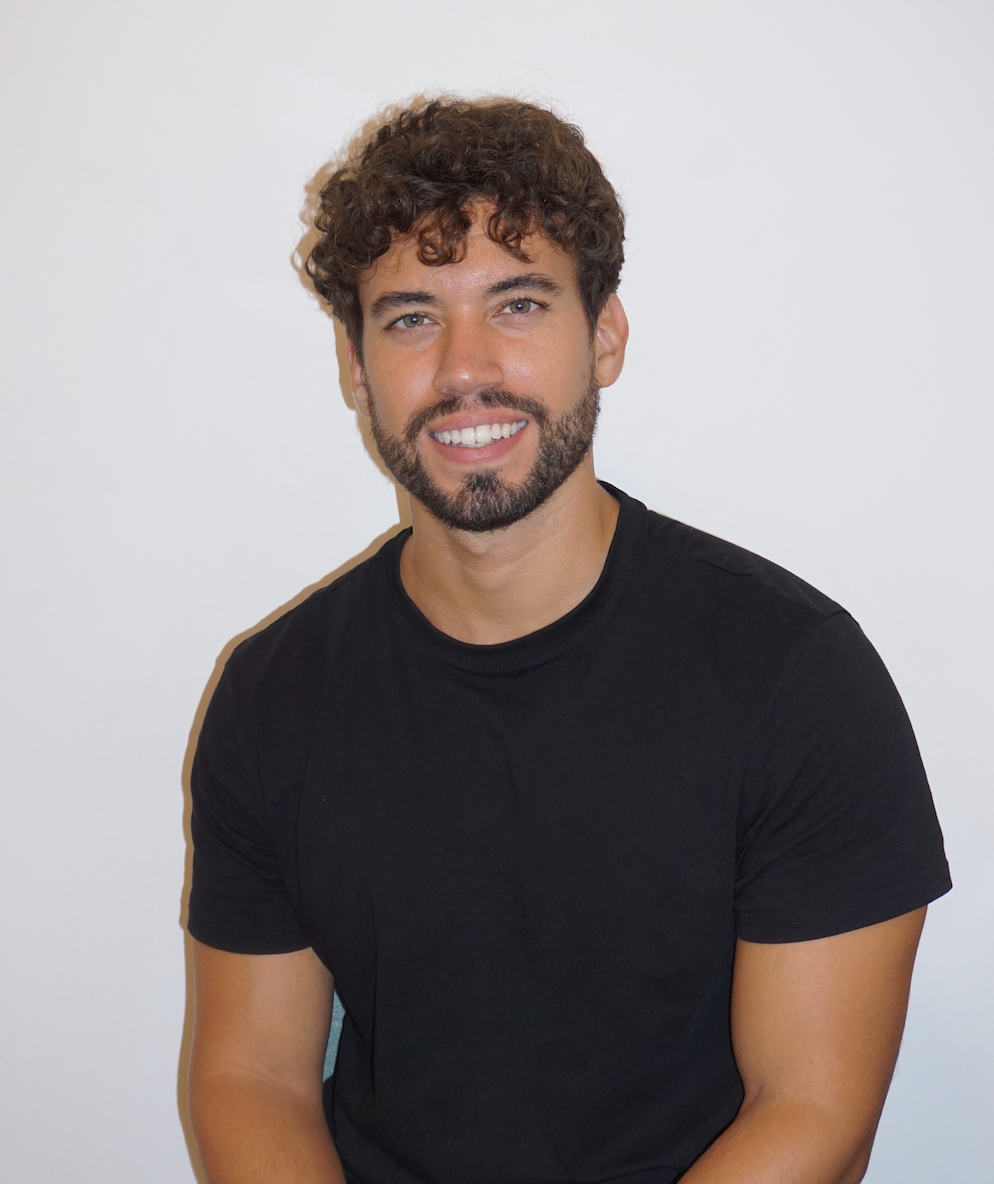
Marcos Jusdado is a physiotherapist and osteopath at Kinesis Clinic, Vida Emirates Hills, in the heart of Dubai. With 9 years of experience and over 12,000 sessions, he specialises in sport physiotherapy, functional neurology (P-DTR), vestibular rehabilitation and chronic pain, working with everyone from busy professionals to competitive athletes. His approach focuses on finding the root cause of pain rather than just treating the symptoms, helping his patient to achieve long-lasting results.