
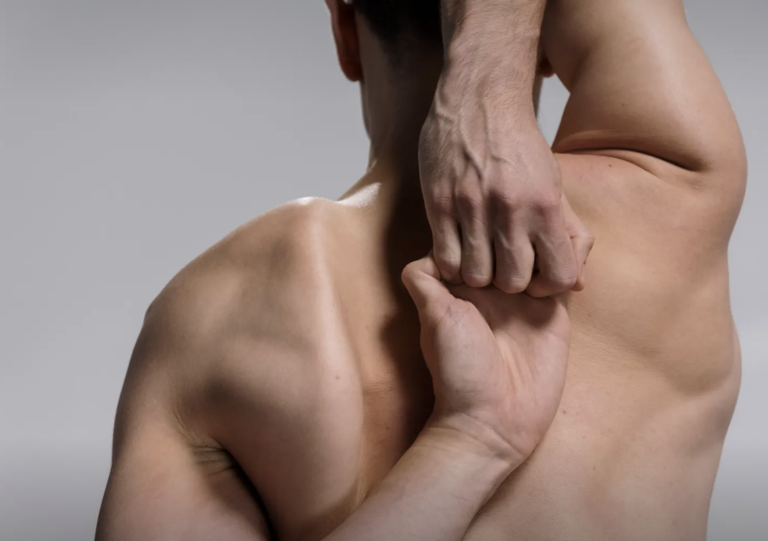
The shoulder joint has a small, fluid-filled cushion called the subacromial bursa, sitting between the rotator cuff tendons and the bony arch above them. Its whole job is to reduce friction so the tendons glide smoothly as the arm moves. When it becomes inflamed, a condition called bursitis, that smooth gliding turns into a sharp, sometimes surprisingly intense pain that can make even simple movements, like reaching for a seatbelt or lifting a bag, genuinely difficult.
What causes shoulder bursitis?
- Repetitive overhead movement that irritates the bursa over time, common in swimmers, painters, and people who do a lot of overhead lifting
- Prolonged pressure on the shoulder, such as leaning on the elbow for long periods or sleeping consistently on the same side
- An underlying shoulder impingement that compresses the bursa along with the rotator cuff tendons
- A minor injury or fall that irritates the bursa directly
- General wear and tear as the shoulder ages, particularly from the 40s onward
Bursitis rarely happens in complete isolation. It’s usually part of a broader pattern of shoulder mechanics that also involves impingement or tendon irritation, which is why treating the bursa alone without addressing the underlying cause tends to bring only temporary relief.
How is it different from a rotator cuff problem?
The two often overlap and can be hard to tell apart without a proper assessment, since the bursa sits right alongside the rotator cuff tendons. Bursitis tends to produce a more diffuse, sometimes quite acute pain, and can occasionally cause visible swelling and warmth over the shoulder if the inflammation is significant. A physiotherapist will usually test both the tendons and the bursa specifically, since the two conditions often need slightly different emphasis in treatment even though they share many of the same causes.
What does bursitis actually feel like?
- A sharp or aching pain on the outer or front part of the shoulder, often worse with overhead movement
- Pain that can flare quite suddenly, sometimes overnight, particularly after unaccustomed activity
- Tenderness when pressing directly on the outer point of the shoulder
- Discomfort lying on the affected side
- In more acute cases, mild swelling or warmth over the joint
How is shoulder bursitis treated?
In the acute, more inflamed phase, calming things down comes first, usually a combination of activity modification (not complete rest, but avoiding the specific movements that provoke the sharpest pain), and hands-on manual therapy techniques to reduce irritation. Ice can help in the first few days if the area feels hot or acutely inflamed. Once the sharpest pain has settled, treatment shifts toward correcting the mechanics that caused the bursa to become irritated in the first place, generally strengthening the rotator cuff and the shoulder blade stabilisers, and improving overhead movement patterns.
For people who spend long hours at a desk in DIFC, rounded shoulder posture is a common contributing factor, since it narrows the space the bursa sits in even before the arm is lifted overhead. Addressing that daily postural load is often just as important as the exercises done in a physiotherapy session.
Will I need an injection?
Most cases respond well to physiotherapy without one. A cortisone injection can be useful for severe, acute bursitis that isn’t settling, giving enough short-term relief to start rehab more comfortably, but it doesn’t correct the underlying shoulder mechanics on its own, so it works best combined with physiotherapy rather than as a standalone fix.
Frequently asked questions
How long does shoulder bursitis take to heal?
Mild cases can settle within two to three weeks with the right approach, while more persistent or recurring bursitis often takes six to eight weeks of consistent rehab to fully resolve.
Can I still exercise with shoulder bursitis?
Usually yes, with modifications to avoid the specific overhead or loaded positions that provoke the sharpest pain, while other training continues largely as normal.
Is heat or ice better for shoulder bursitis?
Ice tends to help more in the first few days if the shoulder feels hot or acutely inflamed, while heat can be more comfortable once the acute phase has settled and the shoulder feels more stiff than inflamed.
Does bursitis come back once it’s settled?
It can, particularly if the underlying cause, such as weak shoulder blade control or poor overhead mechanics, isn’t addressed alongside calming the initial flare-up.
Is shoulder bursitis linked to arthritis?
Not directly, though people with shoulder arthritis or general joint wear can be more prone to developing bursitis as a secondary irritation.
If your shoulder has become sharply painful with overhead movement or pressure, getting it properly assessed helps make sure the actual cause is treated, not just the symptom. You can book a session here.
Want to live longer, and feel better while doing it?
Twice a week I share practical, physiotherapy-backed insights on longevity, movement and healthspan — no fads, just what actually works.

Marcos Jusdado is a physiotherapist and osteopath at Kinesis Clinic, Vida Emirates Hills, in the heart of Dubai. With 9 years of experience and over 12,000 sessions, he specialises in sport physiotherapy, functional neurology (P-DTR), vestibular rehabilitation and chronic pain, working with everyone from busy professionals to competitive athletes. His approach focuses on finding the root cause of pain rather than just treating the symptoms, helping his patient to achieve long-lasting results.