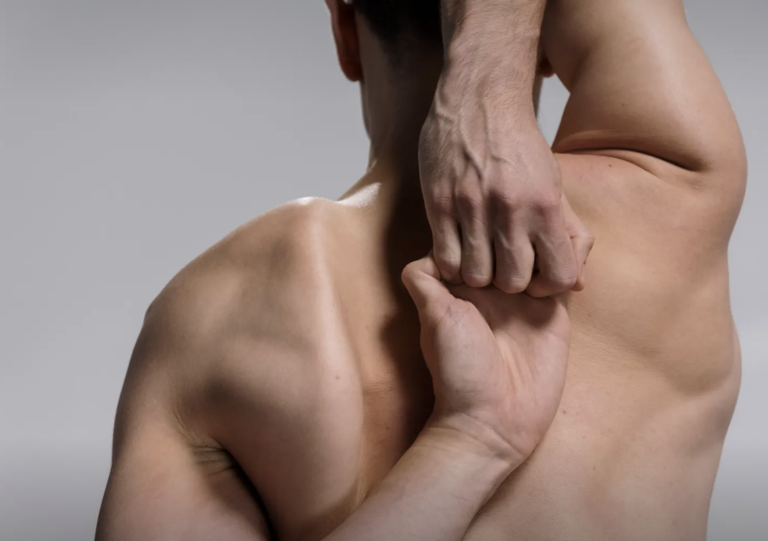

Some shoulder problems announce themselves with sharp pain. Instability is different. It often shows up as a vague sense that the shoulder isn’t quite trustworthy, a feeling of looseness, a slip or clunk during certain movements, or an outright dislocation that leaves no doubt something isn’t right. It’s easy to dismiss until it happens for the third or fourth time, at which point most people start looking for a real answer rather than just resting and hoping.
Shoulder instability means the ball of the joint moves more than it should within the socket, whether that’s a full dislocation, a partial slip that goes back into place on its own (called subluxation), or simply a persistent sense of the joint being unreliable under load.
What causes shoulder instability?
- A traumatic dislocation, often from a fall, contact sport, or a forceful overhead movement, which can stretch or tear the ligaments and cartilage that normally hold the joint in place
- Repeated smaller episodes of the joint slipping, common in swimmers, throwers, and overhead athletes, which gradually stretches the surrounding tissue
- Naturally loose or hypermobile joints, which some people are simply born with
- Weakness in the rotator cuff and shoulder blade muscles that normally provide dynamic control on top of the ligaments
- A previous dislocation that was never properly rehabilitated, leaving the shoulder vulnerable to repeat episodes
How is instability different from general shoulder pain?
Pain from impingement or tendinitis tends to be provoked by specific movements and stays fairly localised. Instability often comes with a sense of apprehension, a feeling that the shoulder might “go” in certain positions, particularly overhead and out to the side, along with clicking, clunking, or a genuine sense of looseness. Some people with instability have relatively little pain day to day but avoid whole categories of movement because the shoulder simply doesn’t feel secure.
Do I need a scan?
After a first traumatic dislocation, imaging is often recommended to check for damage to the labrum (the cartilage rim around the socket) or bone, since this affects the treatment plan. For more subtle, recurring instability without a major traumatic event, a thorough clinical assessment of joint laxity, strength, and control often gives enough information to start treatment, with imaging reserved for cases that don’t respond as expected.
Can physiotherapy actually fix a loose shoulder?
In many cases, yes, particularly for instability that isn’t driven by a large structural tear. The ligaments provide passive stability, but the rotator cuff and shoulder blade muscles provide active, dynamic stability, and that side of the equation responds very well to targeted strengthening. Building genuine strength and control through the full range of the shoulder, especially in the positions where it feels most vulnerable, gives the joint far more support than the ligaments alone were ever going to provide.
For structural cases, such as a significant labral tear or bone loss from repeated dislocations, surgery may be recommended, and physiotherapy still plays the central role in the recovery afterward, rebuilding the strength and control the surgery alone can’t provide.
What does the rehab actually involve?
It starts with restoring pain-free movement through hands-on manual therapy and reducing any protective muscle guarding, then progresses through a structured strengthening programme that targets the rotator cuff and the muscles that control the shoulder blade. As strength builds, the exercises move toward the specific positions and loads that previously felt unstable, training the shoulder to hold itself steady under the kind of stress it will actually face in daily life, sport, or work.
Frequently asked questions
Will my shoulder dislocate again if I don’t have surgery?
The risk of another dislocation depends on age, activity level, and the extent of any structural damage, but a strong, well-guided rehab programme meaningfully reduces the risk in many people, even without surgery.
Is it normal for my shoulder to click without pain?
Occasional painless clicking can be normal, but clicking combined with a feeling of looseness or apprehension is worth having assessed, since it may point to underlying instability.
Can hypermobile people ever have a stable shoulder?
Yes. While the ligaments may always be naturally loose, building strong dynamic muscle control can give a hypermobile shoulder very good functional stability for daily life and most activities.
How long does instability rehab take?
Non-surgical rehab typically runs eight to twelve weeks for noticeable improvement, though returning to demanding overhead sport safely can take longer.
Should I avoid overhead activity altogether?
Not necessarily. A physiotherapist can usually help you modify rather than eliminate overhead movement while the shoulder is being strengthened, unless a specific structural injury requires more caution.
If your shoulder feels loose, clicks, or has slipped more than once, it’s worth building real strength around the joint rather than just hoping it settles on its own. You can book a session here.
Want to live longer, and feel better while doing it?
Twice a week I share practical, physiotherapy-backed insights on longevity, movement and healthspan — no fads, just what actually works.

Marcos Jusdado is a physiotherapist and osteopath at Kinesis Clinic, Vida Emirates Hills, in the heart of Dubai. With 9 years of experience and over 12,000 sessions, he specialises in sport physiotherapy, functional neurology (P-DTR), vestibular rehabilitation and chronic pain, working with everyone from busy professionals to competitive athletes. His approach focuses on finding the root cause of pain rather than just treating the symptoms, helping his patient to achieve long-lasting results.