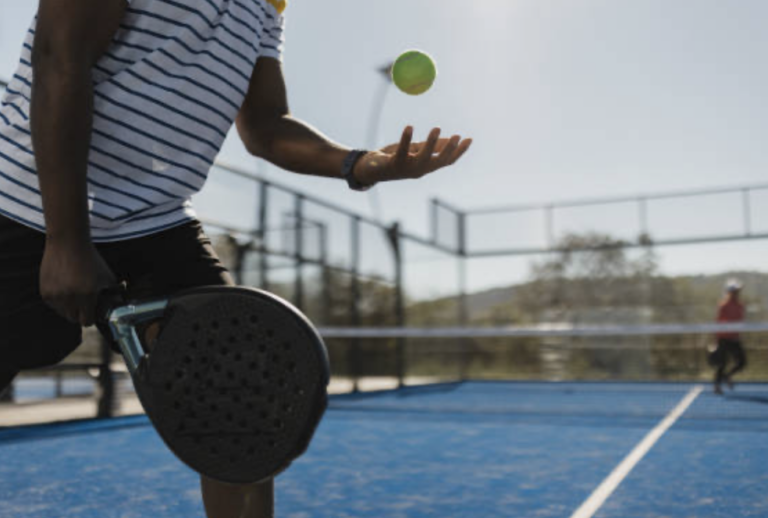

The smash is the shot everyone wants to play well in padel. It’s the point winner, the crowd-pleaser, the one that gets a fist pump from your partner. It’s also, for a lot of regular players, the shot that quietly wrecks the shoulder over a season of matches. What starts as mild stiffness after a long session can turn into a sharp pinch overhead, or a dull ache that makes sleeping on that side uncomfortable.
Shoulder pain from padel is extremely common, and it almost always traces back to the same repeated movement, the overhead smash, performed at speed, over and over, on a joint that wasn’t necessarily prepared for that kind of load.
Why does the smash put so much strain on the shoulder?
The smash asks the shoulder to move through a large range of motion at high speed while generating power, which is one of the more demanding combinations for the joint to handle. The rotator cuff muscles, a group of four small muscles that stabilise the shoulder, have to work hard to control the joint through that whole arc, and they fatigue faster than the bigger, more visible muscles around them. When they tire, the ball of the shoulder joint can shift slightly out of its ideal position during the swing, leading to impingement, a pinching of soft tissue between the bones with every repetition.
Add in players who spend most of the day at a desk, with the shoulder blades sitting in a rounded, forward position for hours, and the shoulder arrives on court already at a mechanical disadvantage before the first smash is even hit.
What does padel shoulder pain usually feel like?
- A pinching or catching sensation when raising the arm overhead, often worse partway through the movement
- Aching that lingers after playing, sometimes into the following day
- Weakness or fatigue in the shoulder during a long match, particularly on serves and smashes later in the session
- Discomfort lying on the affected side at night
- In some cases, a feeling of the shoulder being unstable or slightly out of position during fast movements
What’s actually causing it?
Most padel-related shoulder pain falls into one of a few categories: rotator cuff tendinopathy from repeated overhead loading, subacromial impingement where soft tissue gets pinched during the overhead motion, or occasionally a strain of the muscles around the shoulder blade that struggle to stabilise it through fast, repeated smashes. Less commonly, players with underlying joint stiffness or a previous shoulder injury develop pain because the joint compensates in ways it wasn’t designed to.
A proper assessment matters here because these different causes, while they can feel similar, respond to different treatment emphases.
How is it treated?
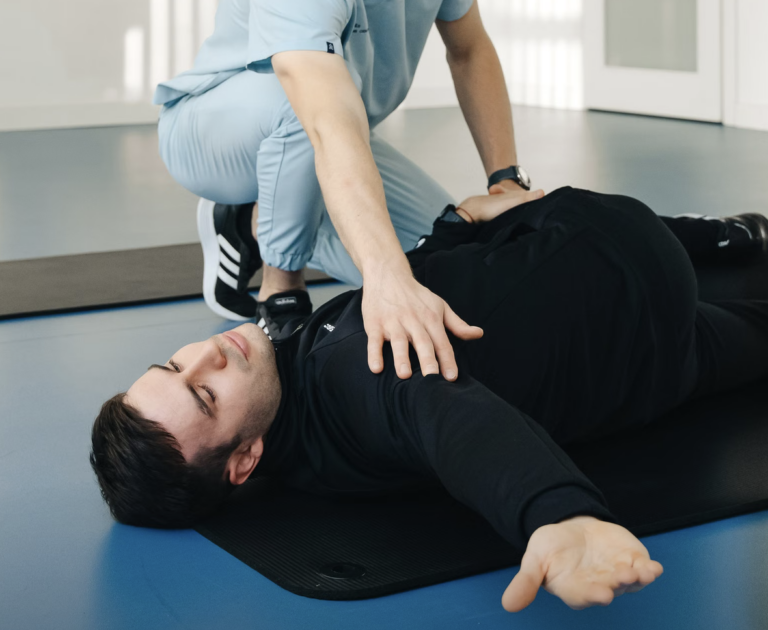
Most cases respond well to physiotherapy without needing injections or surgery. Treatment typically combines hands-on techniques to reduce pain and improve joint mechanics with a structured strengthening programme focused specifically on the rotator cuff and the muscles that control the shoulder blade. Posture and desk setup often come into the conversation too, since a shoulder that spends eight hours a day rounded forward has less room to move well overhead.
Technique also plays a role. A smash hit with poor timing or an overly ambitious reach puts more strain on the joint than one hit with good footwork and body positioning behind it, so a physiotherapist in DIFC working with padel players will often look at how the shoulder moves during the shot itself, not just how it feels at rest.
Can you keep playing while treating it?
In milder cases, yes, often with a temporary reduction in smashes and overhead serves while the underlying strength and mechanics are rebuilt. More irritable presentations sometimes need a short period of reduced play focused on rehab before returning to full-intensity matches. Either way, ignoring it and playing through sharp pain tends to prolong the problem rather than solve it.
Frequently asked questions
Why does my shoulder hurt only when I smash?
The smash loads the shoulder at its most vulnerable range and speed, so pain that appears specifically during this shot often points to rotator cuff overload or impingement.
How long does padel shoulder pain take to resolve?
Mild cases can improve in three to four weeks with the right exercises, while more persistent cases may take eight to twelve weeks of structured rehab.
Do I need an MRI for shoulder pain from padel?
Not usually as a first step. Most cases can be assessed and treated based on clinical examination, with imaging reserved for pain that isn’t improving as expected.
Can poor posture from desk work really affect my padel shoulder?
Yes, a rounded, forward shoulder position from long hours at a desk changes how the joint moves and can make it more vulnerable to overhead loading.
Will strengthening exercises actually fix the pain, or just manage it?
For most rotator cuff and impingement-related shoulder pain, targeted strengthening addresses the underlying cause rather than just masking symptoms.
If your shoulder is starting to complain every time you go up for a smash, it’s worth having it looked at before it limits your game further. A sports physiotherapist in Dubai can pinpoint exactly what’s happening and build a plan to get your shoulder strong enough for a full season of padel. You can book a session here.
Want to live longer, and feel better while doing it?
Twice a week I share practical, physiotherapy-backed insights on longevity, movement and healthspan — no fads, just what actually works.

Marcos Jusdado is a physiotherapist and osteopath at Kinesis Clinic, Vida Emirates Hills, in the heart of Dubai. With 9 years of experience and over 12,000 sessions, he specialises in sport physiotherapy, functional neurology (P-DTR), vestibular rehabilitation and chronic pain, working with everyone from busy professionals to competitive athletes. His approach focuses on finding the root cause of pain rather than just treating the symptoms, helping his patient to achieve long-lasting results.